Global Japanese Sushi Rolls
Highlighted under: World Bowls
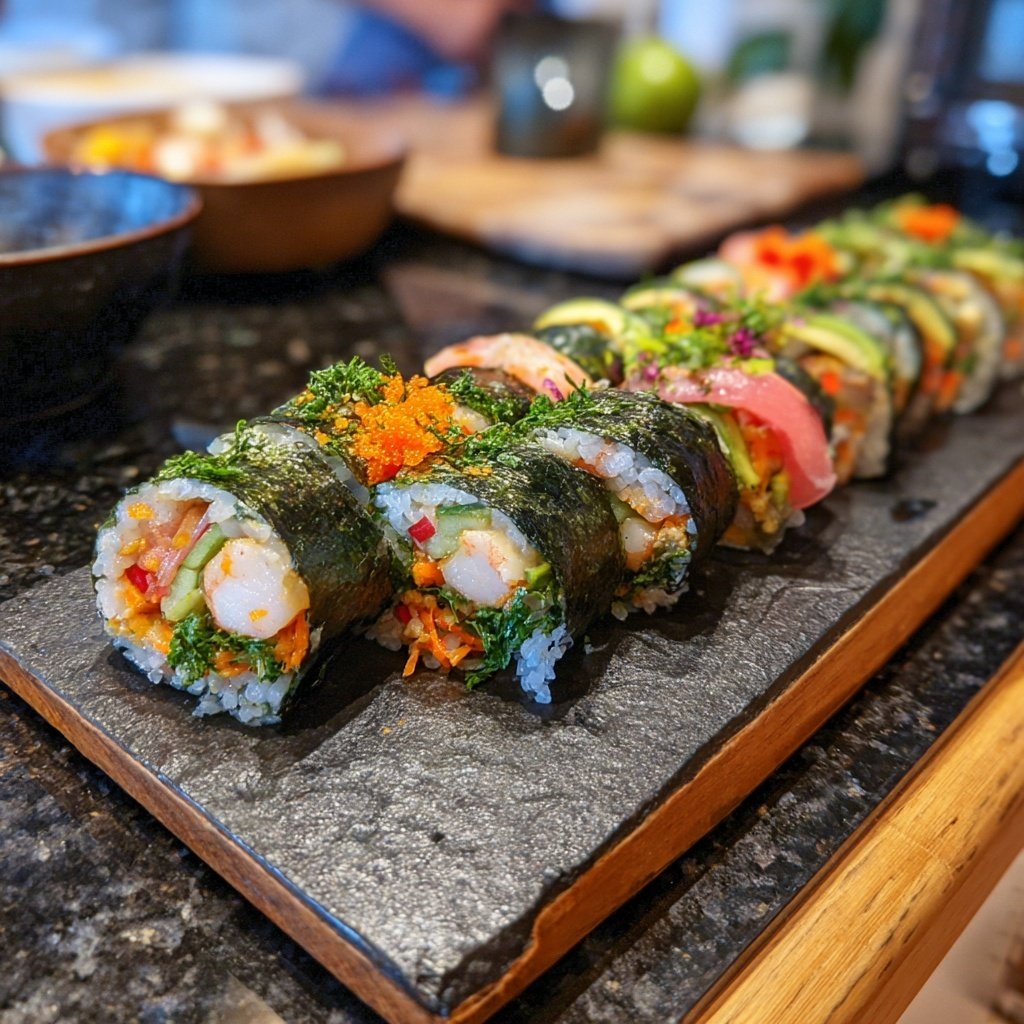
I love making sushi at home, and these Global Japanese Sushi Rolls are my favorite creation. With a vibrant combination of fresh ingredients and unique flavors, this recipe has become a staple in my kitchen. The first time I tried rolling sushi, I was intimidated, but now it feels like second nature. Ingredients like avocado, crab, and veggies not only make these rolls delicious but also visually stunning. If you're looking to impress friends or family, this sushi rolls recipe will surely do the trick!
Making sushi has always been a passion of mine, and creating these Global Japanese Sushi Rolls is a culinary adventure I cherish. Each roll is a mosaic of colors and flavors that beautifully harmonize together. I discovered that using the freshest ingredients, especially sushi-grade fish and crisp vegetables, significantly elevates the final dish. Preparing the rice properly and letting it cool is the secret to perfect rolls!
As I rolled the sushi, I found that a mixture of traditional Japanese elements combined with international flavors makes for an exciting twist. For instance, the addition of cream cheese and herbs provides a creamy texture and depth. Not only are these rolls tasty, but they’re also a hit at gatherings!
Why You'll Love This Recipe
- A delightful fusion of traditional flavors and global inspiration
- Customizable ingredients to suit any palate
- Perfect for impressing guests at dinner parties
Mastering Sushi Rice
The foundation of any great sushi roll is perfectly cooked sushi rice. When rinsing, make sure to do so until the water runs clear to remove excess starch, which can make the rice gummy. Once the water is absorbed, the rice should not be overly sticky but rather cling together just enough to hold its shape. After mixing in the vinegar mixture, let it rest covered to keep it warm and allow the flavors to meld.
I find that using a heavy pot with a tight-fitting lid works best for cooking sushi rice. This ensures even cooking and prevents burning. If you notice that the rice isn’t absorbing the water fully within 20 minutes, lower the heat slightly and give it a few extra minutes. Sometimes, simply allowing the rice to sit for an additional 5-10 minutes off the heat can enhance its texture.
Rolling Techniques
When assembling the rolls, it’s key to apply even pressure as you roll to achieve the ideal tightness. If you find your sushi rolls are coming apart, consider adjusting the amount of filling. Ideally, you should use enough filling to add flavor but not so much that it overwhelms the roll. Try to stay within a 1/4 to 1/3 cup of ingredients per roll.
For added visual appeal, you can also sprinkle sesame seeds or tobiko (fish roe) onto the rice before rolling. Using a sharp knife to slice the rolls is essential. I recommend wetting the knife between cuts; this prevents the rice from sticking, resulting in cleaner slices. Slice gently and swiftly to maintain the integrity of the ingredients inside.
Ingredients
- Prepare all your ingredients before starting the rolling process for better efficiency.
Sushi Ingredients
- 2 cups sushi rice
- 2 1/2 cups water
- 1/4 cup rice vinegar
- 2 tablespoons sugar
- 1/2 teaspoon salt
- Nori sheets (4)
- 1 avocado, sliced
- 1 cucumber, julienned
- 1/2 cup crab meat (or tofu for vegetarian)
- Soy sauce, for serving
- Wasabi and pickled ginger (optional)
- Feel free to experiment with fillings according to your taste.
Instructions
Before starting, gather all your ingredients to create a smooth rolling experience.
Prepare the Rice
Rinse sushi rice under cold water until the water runs clear. Combine the rice and water in a pot, and bring to a boil. Once boiling, reduce the heat to low, cover, and simmer for 20 minutes. Remove from heat and let it rest for 10 minutes. Mix rice vinegar, sugar, and salt, then fold this mixture into the warm rice gently.
Assemble the Rolls
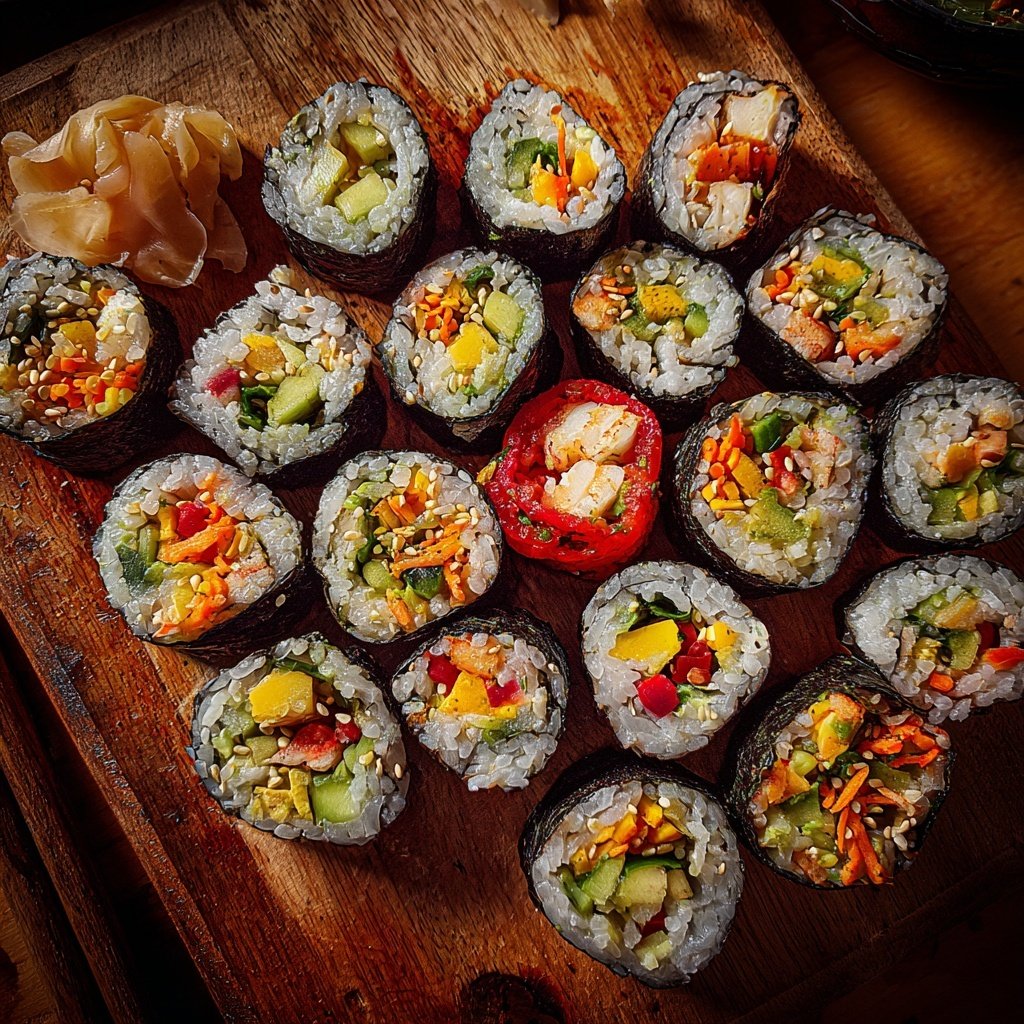
Place a bamboo sushi mat on a flat surface and lay a nori sheet shiny-side down. Wet your hands to prevent sticking, then spread a thin layer of rice on the nori, leaving a 1-inch border at the top. Add slices of avocado, cucumber, and crab meat across the rice. Roll the mat away from you, applying gentle pressure to form a tight roll.
Slice and Serve
Using a sharp knife, slice the roll into 6-8 pieces, wetting the knife to prevent sticking. Serve with soy sauce, wasabi, and pickled ginger.
Enjoy your homemade sushi rolls fresh!
Pro Tips
- Experiment with different filling combinations to find your favorite. Fresh herbs like cilantro or mint can add an exciting twist.
Ingredient Substitutions
If crab meat isn't available or you're looking for a vegetarian option, feel free to replace it with marinated tofu or even tempura vegetables for a crispy texture. For an extra burst of flavor, consider adding cream cheese, spicy mayo, or pickled vegetables like carrots and radishes to bring a different dimension to your rolls.
For the nori, if you're unable to find it, rice paper can be a delightful alternative. It adds a different texture and feels lighter, pairing wonderfully with fresh fillings. Rice paper is more forgiving if you're just starting out, as it sticks together nicely once wet.
Storage and Make-Ahead Tips
For best results, sushi rolls are best enjoyed fresh after making, but if you have leftovers, you can store them in an airtight container in the refrigerator for up to 24 hours. To prevent the nori from becoming soggy, wrap the rolls in plastic wrap before storing. Refrain from freezing sushi rolls, as the texture of the rice and fresh ingredients will be compromised.
If you want to prepare components ahead of time, you can cook the sushi rice and store it in the fridge for 2-3 days. Just remember to reheat it gently to maintain its texture. Pre-slicing the vegetables and crab can also speed up the assembly process, allowing you to whip up sushi rolls in no time when you’re ready to enjoy them.
Questions About Recipes
→ Can I use brown rice instead of sushi rice?
Yes, but note that it may change the texture and flavor. Sushi rice is sticky, which helps the rolls hold together.
→ How do I store leftover sushi?
Sushi is best eaten fresh, but you can store leftovers in an airtight container in the fridge for up to a day. The rice will harden.
→ What can I use instead of nori?
You can use rice paper or lettuce leaves for a gluten-free option, although the flavor and texture will differ.
→ Is sushi safe to eat while pregnant?
It's advised to avoid raw fish during pregnancy. Opt for cooked ingredients instead, such as shrimp or vegetables.
Global Japanese Sushi Rolls
Created by: The Jamescookbook Team
Recipe Type: World Bowls
Skill Level: Intermediate
Final Quantity: 4 rolls
What You'll Need
Sushi Ingredients
- 2 cups sushi rice
- 2 1/2 cups water
- 1/4 cup rice vinegar
- 2 tablespoons sugar
- 1/2 teaspoon salt
- Nori sheets (4)
- 1 avocado, sliced
- 1 cucumber, julienned
- 1/2 cup crab meat (or tofu for vegetarian)
- Soy sauce, for serving
- Wasabi and pickled ginger (optional)
How-To Steps
Rinse sushi rice under cold water until the water runs clear. Combine the rice and water in a pot, and bring to a boil. Once boiling, reduce the heat to low, cover, and simmer for 20 minutes. Remove from heat and let it rest for 10 minutes. Mix rice vinegar, sugar, and salt, then fold this mixture into the warm rice gently.
Place a bamboo sushi mat on a flat surface and lay a nori sheet shiny-side down. Wet your hands to prevent sticking, then spread a thin layer of rice on the nori, leaving a 1-inch border at the top. Add slices of avocado, cucumber, and crab meat across the rice. Roll the mat away from you, applying gentle pressure to form a tight roll.
Using a sharp knife, slice the roll into 6-8 pieces, wetting the knife to prevent sticking. Serve with soy sauce, wasabi, and pickled ginger.
Extra Tips
- Experiment with different filling combinations to find your favorite. Fresh herbs like cilantro or mint can add an exciting twist.
Nutritional Breakdown (Per Serving)
- Calories: 320 kcal
- Total Fat: 8g
- Saturated Fat: 1g
- Cholesterol: 20mg
- Sodium: 500mg
- Total Carbohydrates: 55g
- Dietary Fiber: 2g
- Sugars: 1g
- Protein: 10g